


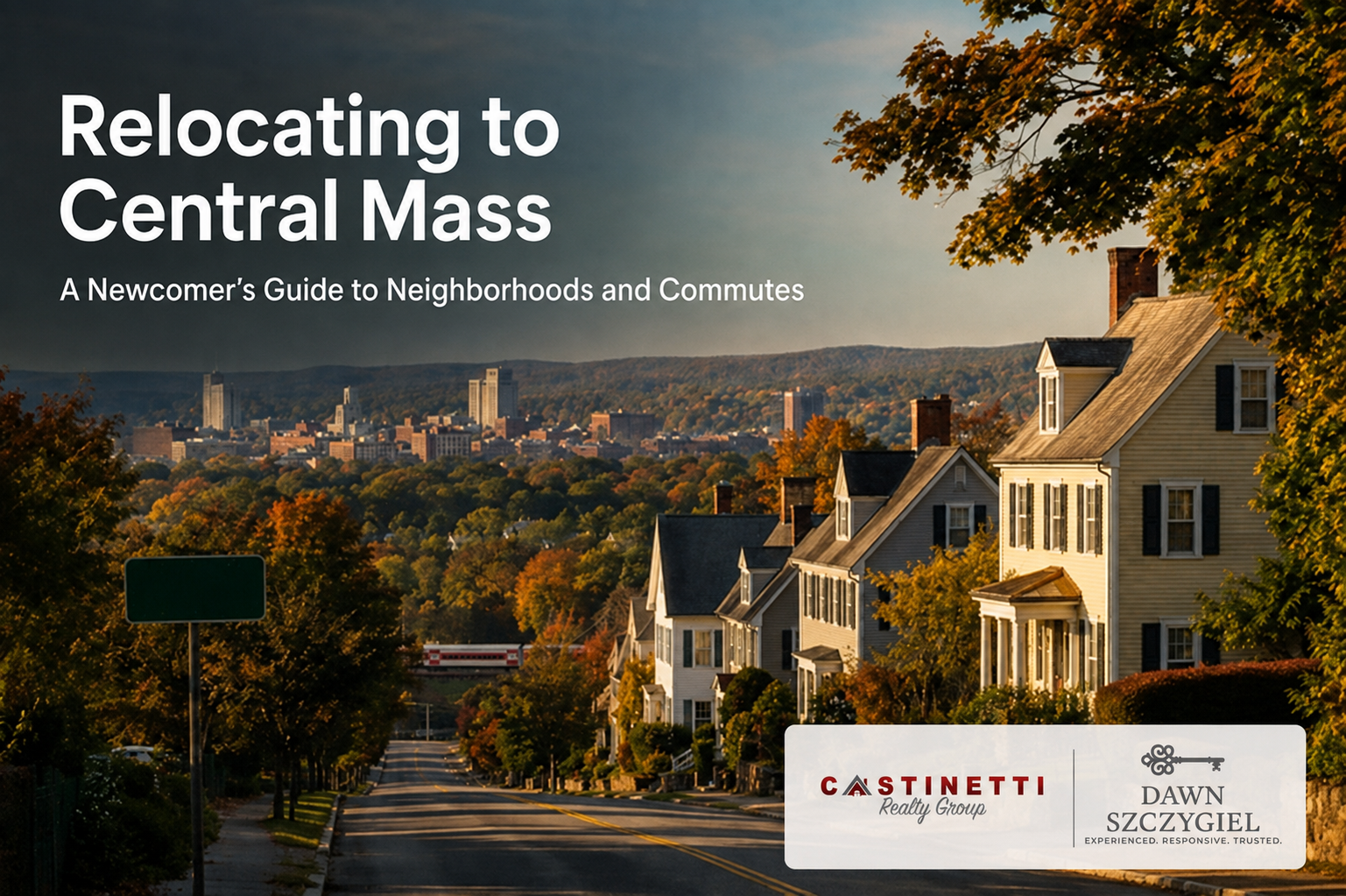
Relocating to Central Mass: A Newcomer’s Guide to Neighborhoods and Commutes
Relocating to Central Massachusetts offers an appealing balance: access to cities and major employers, quieter residential communities, abundant outdoor space, and housing choices that are often more varied than those closer to Boston.
However, “Central Mass” covers a large and diverse area. Life in downtown Worcester is very different from life in a wooded Holden neighborhood, a historic Grafton village, or a commuter-oriented town such as Westborough. Choosing the right community depends on your budget, lifestyle, and—perhaps most importantly—where you need to travel during the week.
Understanding Central Massachusetts
Central Massachusetts generally refers to Worcester and the surrounding communities in Worcester County. Depending on the context, it may also include towns near the MetroWest boundary and communities along the Route 2 corridor.
Worcester serves as the region’s primary economic and cultural center. Surrounding it are suburbs, former mill towns, rural communities, and traditional New England villages. Many residents work locally, while others commute toward Boston, MetroWest, Interstate 495, or northern Massachusetts.
Before choosing a neighborhood, identify your regular destinations:
- Your workplace
- Schools or childcare
- Medical providers
- Grocery stores and shopping
- Family or social connections
- Commuter-rail stations
- Recreational activities
A home may look conveniently located on a map, but traffic patterns, limited cross-town routes, and winter weather can significantly affect travel times.
Worcester: The Urban Center
Worcester is the best starting point for newcomers who want city amenities, local employment opportunities, and a broad range of housing options.
The city includes busy commercial districts, university neighborhoods, established residential streets, and quieter areas with a suburban feel. Housing ranges from apartments and triple-deckers to condominiums and detached homes.
Worcester may be a good fit if you want:
- Restaurants, entertainment, and cultural attractions nearby
- Access to major hospitals and universities
- A shorter commute to Worcester-based employers
- Commuter-rail access
- More housing variety than many surrounding suburbs
Neighborhood conditions can change from one block to another, so visit prospective areas during the day, at night, and during weekday traffic.
Shrewsbury: Convenient and Connected
Located east of Worcester, Shrewsbury is popular with residents who want suburban living without being far from the city.
Its location provides convenient access to Route 9, Interstate 290, and nearby Interstate 495. The town also offers extensive shopping and everyday services. Housing includes established subdivisions, townhomes, apartments, and newer developments.
Shrewsbury can work well for people commuting to Worcester, Westborough, Marlborough, or other MetroWest employment centers. Traffic around Route 9 can become heavy, however, so test your intended route during the hours you expect to travel.
Westborough: A Strong Choice for Hybrid Commuters
Westborough sits near the meeting point of Central Massachusetts and MetroWest. It offers a traditional town center, suburban neighborhoods, major-road access, and a commuter-rail station.
The town can be especially attractive to people who work in Boston only a few days each week or who commute to employers along Interstate 495.
When comparing homes in Westborough, consider the full door-to-door commute. Include the drive to the station, parking, waiting time, the train ride, and transportation from the Boston station to your workplace.
Grafton: Village Character with Rail Access
Grafton combines historic village areas, residential neighborhoods, and newer housing developments. It offers more space than many communities closer to Boston while retaining access to Worcester and MetroWest.
The Grafton commuter-rail station can make occasional Boston trips more manageable. However, station access varies depending on where you live within the town.
Grafton may appeal to newcomers who want:
- A quieter residential setting
- Historic New England character
- Access to Worcester and the Mass Pike
- Commuter rail as an alternative to driving
- A mix of older and newer homes
Holden: Wooded and Residential
North of Worcester, Holden offers a quieter atmosphere with tree-lined roads, established neighborhoods, and a strong town-centered identity.
It is a practical option for residents who work in Worcester but prefer a more suburban environment. A car is generally necessary, and Boston commuting is less convenient than it is from towns farther east.
Winter conditions deserve particular attention in wooded or elevated neighborhoods. Ask about road maintenance, snow removal, driveway conditions, and school-related traffic.
Leominster: A Northern Regional Center
Leominster is a small city in northern Worcester County with varied housing, shopping, local services, Route 2 access, and commuter-rail service.
It can be a good choice for people working along the Route 2 corridor or in northern Central Massachusetts. It also provides a more self-contained environment than some smaller surrounding towns.
Boston commuting is possible, but it can be lengthy. As with other rail-served communities, calculate the complete journey rather than looking only at the scheduled train time.
What to Know About Commuting
Commuting to Boston
Daily travel from Central Massachusetts to Boston is possible, but it can be demanding. Driving conditions vary significantly with traffic, weather, construction, and your exact destination.
Commuter rail can reduce the stress of driving, but it does not automatically create a short commute. Station parking, train frequency, transfers, and the final trip to your workplace all matter.
Hybrid workers may find the Central Mass-to-Boston trade-off more manageable than people who must travel five days per week.
Commuting to MetroWest and Interstate 495
If your job is in Westborough, Marlborough, Framingham, Southborough, or elsewhere near Interstate 495, communities east and southeast of Worcester may provide a practical balance.
Shrewsbury, Grafton, Westborough, and nearby towns can offer shorter trips than communities farther west or north. Route 9 and Mass Pike traffic can still produce delays during peak hours.
Commuting into Worcester
A suburban commute into Worcester may appear short, but travel time can change because of school traffic, construction, winter weather, and limited routes across the city.
Make the drive at your expected commuting time before signing a lease or purchasing a home.
Costs to Consider Beyond Housing
Rent or mortgage payments are only part of the cost of living in Central Massachusetts. Your budget should also account for:
- Property taxes
- Heating oil, natural gas, or electric heating
- Water and sewer charges
- Vehicle expenses
- Highway tolls
- Train fares and station parking
- Snow removal
- Landscaping
- Condominium fees
- Private-road or septic-system costs
Older New England homes may have distinctive character, but they can also require additional heating, maintenance, or weatherproofing.
How to Evaluate a Community
Visit each prospective town or neighborhood more than once. A Saturday afternoon does not show what weekday traffic, school congestion, nighttime noise, or commuter parking will be like.
Before making a decision:
- Drive your expected commute during rush hour.
- Visit the neighborhood after dark.
- Locate groceries, healthcare, and other essentials.
- Confirm school assignments directly with the district.
- Review current train schedules and parking rules.
- Ask who maintains the road, sidewalk, and driveway.
- Compare the complete monthly cost of living.
- Check municipal plans for nearby development or road projects.
The best community is not necessarily the one with the shortest advertised commute or the largest home. It is the one that makes your ordinary week comfortable and sustainable.
Frequently Asked Questions
What areas are considered Central Massachusetts?
Central Massachusetts generally includes Worcester and surrounding Worcester County communities. The term may also include towns near MetroWest and communities along the Route 2 corridor.
Can I commute from Central Mass to Boston every day?
Yes, but the commute can be long and unpredictable. Its practicality depends on your town, work schedule, destination, and access to commuter rail. Hybrid schedules are often easier to manage.
Which Central Mass towns have commuter-rail access?
Worcester, Grafton, Westborough, and Leominster are among the commonly considered rail-served communities. Routes, schedules, fares, and parking arrangements should be verified before moving.
Do I need a car in Central Massachusetts?
Most residents will find a car necessary. Some Worcester neighborhoods are relatively walkable, but regional errands and travel between communities are generally easier by car.
Is Central Massachusetts suitable for families?
The region offers many residential communities, parks, schools, and family-oriented amenities. Because programs and school assignments vary, research the specific town and address rather than relying on regional generalizations.
What should I know about winter commuting?
Snow, ice, hills, narrow roads, and parking restrictions can affect travel. Ask about snow removal and road maintenance, and allow additional time during winter weather.
Should I rent before buying?
Renting first can be helpful if you are unfamiliar with the region. It gives you time to experience the commute, compare communities, and understand seasonal conditions before making a long-term commitment.
Final Thoughts
Central Massachusetts offers something increasingly difficult to find elsewhere in the state: a choice between city life, traditional suburbs, historic villages, and rural surroundings without leaving one connected region.
Start your search with your real weekly routine. Test the commute, explore the surrounding town, compare total costs, and imagine an ordinary Tuesday—not just moving day. That approach will help you find a Central Massachusetts community that truly feels like home.
Check out this article next